To see updated Preparedness Pro blog posts, please visit us here:
http://preparednesspro.wordpress.com.
Tuesday, May 5, 2009

Monday, May 4, 2009
Thirty Minutes. Do You Feel Lucky Today?
By Kellene Bishop
If there ever is a cause for a run on the grocery stores, the supplies will be depleted in thirty minutes. That’s it. One half hour warning is all you will have to get more food, more water, more produce, more seeds, more medical supplies, etc.—you and the rest of your community. Yet in that thirty minutes, your local stores will only be able to supply less than 1% of your community with the goods they would need or hoard. Do you really want to risk that you’ll be a part of that lucky 1% and that you’re fast enough to get all of your necessary goods available in that one half hour?
 - Wheat shortages
- Threat of Global War
- Escalating oil prices
- A trillion dollar national deficit
- Constitutional freedoms being shredded
- Threat of banking collapse
- High rate of home foreclosures
- Threat of H1N1 Flu epidemic
- Unprecedented inflation of the dollar
- Foreign hackers successfully tapping into the power grid
- Skyrocketing unemployment
These are all sound reasons and even warnings why many Americans are beginning to wake up and take steps towards emergency preparedness today. Thank goodness many are beginning to notice some signs which cause them to take such actions. My greatest concerns are for those who still ignore the inevitable. Grocery stores aren’t stocked for any kind of a panic. They are orchestrated solely for a consistent replenishing of cupboards throughout America.
 Gas stations will last approximately one and a half hours depending on the day a rush to hoard comes into play. Again, are you willing to risk that you’re a part of the select few who will have access to gasoline in a crisis?
No one has to play Russian Roulette with the security, safety and survival of their family today. Everyone has been sufficiently warned that the need will exist in which you will need your own emergency preparedness supplies. Whether you’re a reader of the scriptures, or simply a viewer of the broadcast news, evidence is mounting just how vulnerable our current way of life truly is, and as such we must be prepared.
Stocking up for the future is not only wise preparation, but it’s very therapeutic one as well as it exerts a proactive control in an uncertain world. The choice is ultimately yours. Will you prepare or perish, suffering needlessly?
Copyright 2009 Kellene Bishop. All rights reserved.
You are welcome to repost this information so long as it is credited to Kellene Bishop.
Friday, May 1, 2009
Beans Under Pressure
By Kellene Bishop
 Since I know that anyone who is serious about having an emergency preparedness supply of food is bound to have beans, I thought that this would be a vital article today.
Besides, I was craving yummy beans today, so I decided to share with you yet another e-z p-z pressure cooker recipe.
The great thing about a pressure cooker is that you do NOT have to soak your beans ahead of time. By all means, you can, but it is not required. Yet one more way to save time and energy in an emergency. The following recipe is super simple. The key to cooking beans in a pressure cooker is to cook at the low heat level in order to avoid the foaming. However, with a Kuhn-Rikon pressure cooker, you don’t have much problem with this either so long as you do not exceed, by even a millimeter, the 2/3 full mark.
In my storage we have dried pinto beans, kidney beans, butter beans, lima beans, garbanzo beans, and more. This recipe is actually a GREAT start for each of those types of beans. (Although you don’t need to “smash” them unless you’re making “refried beans.” Also, keep in mind that adding the salt in the beans will also help to avoid any “foaming” when you release the pressure. Feel free to season the beans additionally with liquid smoke, or Tabasco sauce, and other great spices.
 2 c. dry pinto beans
(Optional: Soak pinto in hot water in a covered medium saucepan for 1 hour.) At the very least you need to rinse the beans in warm water. Drain beans, then put them in the pressure cooker. Add the remainder of your ingredients. Seal lid of pressure cooker. Cook over medium-high heat for 50-60 minutes depending on desired tenderness. Release pressure simply by taking the cooker off of the heat. Let the pressure come down naturally. Mash cooked beans. Serve with your favorite compliments such as warm tortillas.
Additional options: Throw in some canned diced SPAM, ground beef, or leftover ham.
Copyright 2009 Kellene Bishop. All rights reserved.
You are welcome to repost this information so long as it is credited to Kellene Bishop.
 Since I know that anyone who is serious about having an emergency preparedness supply of food is bound to have beans, I thought that this would be a vital article today.
Besides, I was craving yummy beans today, so I decided to share with you yet another e-z p-z pressure cooker recipe.
The great thing about a pressure cooker is that you do NOT have to soak your beans ahead of time. By all means, you can, but it is not required. Yet one more way to save time and energy in an emergency. The following recipe is super simple. The key to cooking beans in a pressure cooker is to cook at the low heat level in order to avoid the foaming. However, with a Kuhn-Rikon pressure cooker, you don’t have much problem with this either so long as you do not exceed, by even a millimeter, the 2/3 full mark.
In my storage we have dried pinto beans, kidney beans, butter beans, lima beans, garbanzo beans, and more. This recipe is actually a GREAT start for each of those types of beans. (Although you don’t need to “smash” them unless you’re making “refried beans.” Also, keep in mind that adding the salt in the beans will also help to avoid any “foaming” when you release the pressure. Feel free to season the beans additionally with liquid smoke, or Tabasco sauce, and other great spices.
Pinto Beans
 2 c. dry pinto beans
½ cup of minced onion
2 lg. garlic cloves (or 2 heaping tablespoons of minced garlic)
1 tsp. oregano
4 sprigs fresh cilantro or 1 tsp. dry cilantro herb
1/4 tsp. cumin
1/4 tsp. pepper (or more to taste)
½ Tbsp salt
6 1/2 c. water
6 qt. pressure cooker
(Optional: Soak pinto in hot water in a covered medium saucepan for 1 hour.) At the very least you need to rinse the beans in warm water. Drain beans, then put them in the pressure cooker. Add the remainder of your ingredients. Seal lid of pressure cooker. Cook over medium-high heat for 50-60 minutes depending on desired tenderness. Release pressure simply by taking the cooker off of the heat. Let the pressure come down naturally. Mash cooked beans. Serve with your favorite compliments such as warm tortillas.
Additional options: Throw in some canned diced SPAM, ground beef, or leftover ham.
Copyright 2009 Kellene Bishop. All rights reserved.
You are welcome to repost this information so long as it is credited to Kellene Bishop.
Thursday, April 30, 2009
Emergency Water Sense
By Kellene Bishop
 Get the most from your water in an emergency by observing the following tips:
- A Vegetable Water Bin: When you open a can of vegetables, (peas, corn, etc), instead of draining the liquid and throwing it out, drain it into a large bin, covered with a lid. Drain all of your vegetables in the same bin. Then when you make a soup, rice, or pasta, you can use this water to cook with instead of having to use fresh water. The same holds true for any water that you use to cook vegetables in on the stove. Suppose you use just a tad bit of water to steam your cabbage in, for example. Rather than discarding the water, put it in your vegetable water bin instead.
 Save Your Canned Syrups: The same goes for canned fruits, however, the water in these cans tends to be thicker, and certainly sweeter. You can use this “syrup water” to sweeten grain dishes for breakfast such as oatmeal, cracked wheat, etc. It’s also a great substitute for water in many baked good recipes. You can also use this liquid to make a “sweet milk” with your powdered milk and have a very pleasant taste. It’s yet one more way to ensure your children get their nutrients from powdered milk.
- Re-Use Your Bath Water: In the “olden days” it was not uncommon for multiple family members to reuse bath water. While a bit of hot water may need to be added, a couple of baths does not constitute needing to throw it out. You can reuse your bath water to wash laundry in. If you use biodegradable bath soap, then you can also use your bath water to water your garden with as well.
- Washing Dishes to the Two-Step: When you wash your dishes, have two bins of water, one for washing, and one for rinsing. When you need to dispose of your wash water, then use your previous rinse water to wash in. Yes, you will need to add some more hot water, but it’s obviously a lot less than starting with a new bin of water. Also, the biodegradable soap is a good idea in this case as well. (As stated previously, I highly recommend using the Shaklee products in this case as they take up much less of your storage space, have multiple uses, and are complete environmentally friendly. For more info go to www.shaklee.net/earlene)
- Use Paper Goods When Possible: Instead of using dishes for everything, be sure you have paper goods on hand so that you can conserve the amount of water needed for cleaning. The paper goods also serve as good kindling when you’re making a fire to cook with.
 Catch Rain Water: Unless you live in Colorado which forbids its citizens from catching rain water, you should indeed set yourself up to do so. Simply place an open bucket (I recommend a 55 gallon one) at the base of your roof’s run off. You will be shocked at just how fast you can fill up a 55 gallon container with just a couple of mild rain storms. This water can be used for drinking once it’s pasteurized, and it certainly can be used for watering your garden, cleaning, bathing, etc. Don’t overlook what the good Lord can provide you. Capture it.
- Catch Bath Water: My husband and I have procured a “solar shower” so that we can enjoy a shower in times of “roughing it” rather than using a tub. However, we’ve also purchased a large, shallow, plastic bin about the size of a mini-shower floor. We’ve done so in an effort to capture even the shower water in order to be able to reuse it.
- Alternative Bathing Method: I lived on a very rustic farm periodically as a kid. We didn’t have the luxury of a bath tub or a shower. Instead, when we needed to bath, we simply filled up a plastic bin with hot water. We then used a washcloth and soap to clean ourselves up. Nothing fancy. But it works just fine, and is a valuable approach to bathing when water is a scarce commodity. We grew up calling this a “spit bath.”
- Save Your Pasta Water: In addition to having a veggie water bin, and a fruit water bin, I would indeed recommend having a pasta water bin to store the water in which you cook your pasta, rice, and other starches in. This water is ideal for thickening sauces, soups, and casseroles.
- Avoid Running Water Actions: Most brush their teeth with running water. You’ll have to get over that habit real quick in a time of emergency. Out of necessity while living in the Philippines, I discovered, lo and behold, that I didn’t need to wet my toothbrush prior to brushing my teeth. And I can simply use a cup of water to rinse my mouth and my toothbrush with. The same holds true for hand washing. If you wash your hands first in a more communal bin for the tough stuff and then just rinse them off with fresh water, you’ll conserve a lot of water.


Overall, before discarding a liquid, ask yourself what else you can possible use the water for? As you may recall, it is recommended that you store 1 gallon, per person, per day for whatever time period you’re preparing for. (I plan on a year.) This gallon of water is intended for drinking, cooking, bathing, and cleaning. However, is it a MINIMUM recommended amount. Putting these conservations tips into practice will help you stretch that gallon to its maximum capacity.
Copyright 2009 Kellene Bishop. All rights reserved.
You are welcome to repost this information so long as it is credited to Kellene Bishop.
Wednesday, April 29, 2009
Embracing SPAM
By Kellene Bishop I’ve encountered some pretty strong facial expressions when I insinuate that having SPAM in one’s food storage is an asset. And to be forthright, I totally get it. Even when we were dirt poor, my mother never made us eat it. However, I wasn’t educated in matters of emergency preparedness then either. But I certainly am now, and as a result, have come to embrace the wonders of SPAM. I’ve discovered that if I cook with it much like I would chicken or pork in a recipe, then it’s delightful.
And no, the irony that I’m writing about SPAM today in face of the Swine Flu has not escaped me. I guess I’m just warped that way.
I have some great recipes that I’ve tried out and adapted for “food storage” available ingredients, but before I do that, I thought I’d share a couple of factoids about SPAM for you.
A 2 ounce serving contains 7 grams of protein and 15 grams of fat—two important components for the body during an emergency.
Residents of Hawaii and Guam consume the most amount of SPAM per capita than any of the other areas, including 41 countries in which SPAM is sold. In fact, SPAM is sold on the McDonald’s menu in Guam and the Burger King menu in Hawaii—known as the “Hawaiian Steak.” SPAM was widely used during World War II in Okinawa and the Philippines due to it being an effective way to get meat to the front lines. Soldiers had to eat it for breakfast, lunch, and dinner. As such, they began to joke that SPAM was simply “ham that didn’t pass its physical” or “meatloaf without basic training.” Surpluses of SPAM from the soldiers' supplies made their way into native diets. Consequently, SPAM is a unique part of the history and effects of U.S. influence in the Pacific.
SPAM comes in 12 different flavor varieties, including garlic, hot and spicy, and a roasted turkey version.
Due to its low cost, it’s long been stigmatized as “poor people food.”
SPAM is consumed all over the world in fried rice, stir fried with noodles, in sandwiches, burritos, and fried on the sides and served with eggs. It’s even been used in sushi rolls.
Every year, Austin, MN has a Jam celebration in honor of the food which includes fireworks and a carnival-type setting. Waikiki, HI does something similar as well each year. Austin, TX holds a Spamarama each year which conducts a Cook-off Contest as well.
My suggestion is that you begin familiarizing yourself with SPAM now, so that you can successfully use it in your meal preparation in the (not so distant?) future.
Fritatta
3 tbsp butter or oleo or vegetable oil
7-oz can SPAM, cubed
1/4"1/2 cup of dried chopped onion
10 pitted black olives, chopped
1/2 cup of dried chopped green pepper
6 eggs (or equivalent of dried eggs, rehydrated)
2 medium potatoes, peeled and cubed (or dried equivalent)
2 tbsp water
1/4 tsp pepper
In 10-inch omelet pan or skillet, melt 2 tbsp butter over medium heat. Add onion, green pepper and potatoes; cook over medium heat, stirring occasionally, until vegetables are crisply tender (5 to 7 minutes). Add SPAM and olives; continue cooking until SPAM is heated through. Loosen sautéed ingredients from bottom of pan; add remaining 1 tbsp butter. Tilt pan to cover bottom with butter. In small bowl mix eggs, water, and pepper; pour over SPAM mixture. Cover; cook over low heat 12 to 15 minutes or until egg mixture is set on top. With pancake turner, loosen edges and bottom; invert onto serving platter. Yield: 6 servings
Hearty Spam and Bean Soup
2 cups dried pinto beans, wash and soak overnight (or make this in a pressure cooker)
12 oz can SPAM, cubed 1/2"
3 cloves garlic, minced
2 tbsp chili powder
1/4 cup firmly packed brown sugar
1 quart water
3 bay leaves
1 tsp oregano
1 tsp thyme
1 tsp cumin
2 (13-oz) cans tomato juice
1 (14-oz) cans chicken stock
1 medium onion, chopped (or dried equivalent)
In 4-quart saucepan add all ingredients; stir to blend. Cook over medium heat until mixture comes to a boil. Boil for 10 minutes. Reduce heat to low; continue cooking, stirring occasionally, until soup is thickened (3 to 4 hours or 30 minutes in a pressure cooker). Remove bay leaves. Yield: 6 servings
Spaghetti SPAM Carbonara
1 1/2 lbs spaghetti
3 tbsp butter3 tbsp olive oil
12-oz can SPAM, cubed 1/4"
1/2 cup chopped onion
4 eggs, slightly beaten
1/2 cups grated parmesan cheese
1/4 cup chopped fresh parsleyground pepper
Cook spaghetti according to package directions. Meanwhile, in skillet cook SPAM and onion in oil and butter over medium heat until lightly browned. Set aside. When spaghetti is cooked, drain; return to pot. Add eggs; toss to combine. Add SPAM mixture, cheese and parsley; toss to combine. Season to taste with pepper. Serve immediately. Yield: 6 servings.
Copyright 2009 Kellene Bishop. All rights reserved.
You are welcome to repost this information so long as it is credited to Kellene Bishop.
Tuesday, April 28, 2009
3 Reasons to Pay Attention to the Swine Flu
By Kellene Bishop
Is the Swine flu just something on the news, or should you actually be concerned about it from a preparation standpoint? The answer is yes, you should indeed be concerned about the Swine Flu—here are three important reasons why.
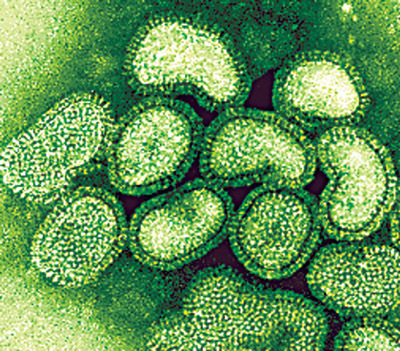
 First of all, understand the virus itself and you will understand why informed concern is appropriate in this case. It is a mutation which has components of the Avian flu, the regular flu, and Swine flu. Avian flu is dangerous only in that it is transported from birds to people. It cannot be transferred from people to people. However, this strain of the Swine Flu can. So, if it continues to mutate, you can have a virus strain that not only transfers from person to person, but also from birds to people. As you know, birds have very little borders. They are able to spread their disease via the dust and any other airborne particles easily. Because this virus has already demonstrated a successful mutation of 3 different strains, it shows that it will clearly continue to do so. A mutated virus makes creating antigens in your body very difficult. And if YOU can’t even create the antigens, then a scientist cannot do so either. Additionally, this particular strain of flu is very different. Instead of simply attaching to cells in our body, it is actually able to penetrate the cell wall, thus making exposure to antigens much more challenging. This particular strain of influenza, because it is compromised of H1N1 (Swine) and H5N1 (Avian) makes it an extremely penetrable and deadly virus which is rapidly adaptable and virulent. These two strains combined produce a killing potential at a cellular level.
 Another reason to be concerned is that the confirmed cases of Swine flu that we have been told by the media to date have been done so through the very limited availability of test kits from the CDC (Center for Disease Control). Understand that only the CDC can “confirm” a case of this type of virus. And the CDC only this week began sending out test kits to parts of the U.S. and to other parts of the world as well. We already have cases which have spread to New Zealand, Scotland, Brazil, Australia, and Canada. What all of this means is that we haven’t even begun to see the real numbers of people affected this flu epidemic. Keep in mind that viruses in general are not living organisms, rather they are protein structures whose only goal is to replicate themselves.
The third reason why we should indeed be concerned is because even if this isn’t “the big one” it is certainly an incident which should wake us from our slumber of apathy. There is much to be learned from this outbreak that can literally save our lives. Looking at this outbreak and analyzing how we can better be prepared in the event that a pandemic affects our country and even the world, is the best way to prepare. However, having said that, I would prefer that you not underestimate the efficacy of this particular outbreak. To do so would be sugarcoating a situation with strychnine. Let’s not forget that facts thus far here. Schools are being shut down. DHS is taking action to be prepared for a possible pandemic. (Compare this to the fact that FEMA can’t even take action until after a serious crisis has occurred—this should tell you something.) The World Health Organization is NOT closing the borders because they state that such an act would be futile since the virus is already established widespread. (Remember what I said about not even having the real numbers yet?) One case of the Swine flu on a plane headed to JFK, La Guardia, Salt Lake City, Los Angeles, the San Francisco international airport and you can easily have a pandemic. (Come on. Think about it. You know how incredibly dirty the air on the airplanes are. Do you actually think that the air filtration systems on board will filter out this virus from traveling from one host to another?) Keep in mind that individuals who are carrying the virus may simply be a host. They may carry it to others without necessarily manifesting symptoms of it themselves. So you may assume that you are interacting with a perfectly healthy person, but still contract the virus strain.
I’m not being a fear monger here. As someone who tends to get emotionally involved in the well-being of others, I’m trying to get you to be fully aware of how fast this or other strains like it can spread. It will be incredibly difficult for me to see so many that I know and love exposed to such an illness such as the swine flu. So, given that I do believe you have need to be cautious in this situation and most definitely to learn from it, allow me to share with you how your behavior must change in the event of a full-spread outbreak. Review the following steps so that you can truly be prepared for such an event:
 1) Always use a breathing mask outside of your home.
2) Wash your hands constantly and do not remove or put on your breathing mask without having just washed your hands
3) Keep your hands away from your eyes and mouth under all circumstances. (Use a fork even to eat your French fries with.)
4) Do not eat any food which you have not personally prepared
5) Regularly ingest immune system building vitamins and herbs so that you can create a true, non-chemical immunity. Don’t wait until symptoms appear. While viruses tend to mutate and get stronger under chemical attacks, they respond completely differently to non-chemical, strong environments. This is the very kind of culture you can create in your body if you start partaking now of quality herbs, vitamins, and minerals. I STRONGLY suggest that you ingest sublingual (taken under the tongue) or colloidal versions of your nutrition supplements as such methods are actually able to permeate the cells. Taking pills does not have this effect on your body and thus is useless to attacking a strain such as this that burrows into your cell.
I highly recommend you use a colloidal version of minerals. Bacteria simply cannot grow in a mineral environment. (By the way, colloidal silver is another good remedy to have on hand for fighting a myriad of illnesses as well—see my other suggestions in yesterday’s article.)
6) Be sure you wash ALL of your vegetables (even the ones with skins) and meats very well prior to storing or cooking them. Also be sure to wipe off your cans of food prior to opening them. When you do follow these steps also be sure that you keep your hands washed afterwards as well. Here’s a natural wash for your meats and vegetables that you can make yourself.
· 1/4 cup Vinegar
· 2 Tablespoons salt
Fill a clean sink with cold water, (a plastic dish pan also works wonders) add vinegar and salt and let sit 15 minutes, rinse. (The vinegar cleans the fruits and vegetables, while the salt draws out any maggots and such, dirt and other undesirable components. This wash does not adversely affect the flavor at all and vinegar helps take care of the sprays and wax they tend to use.
 7) Use a germicide (not a sanitizer) on high-traffic areas in your home such as door and cabinet knobs, telephones, and table edges. I highly recommend the one that Shaklee makes. It’s 100% biodegradable, concentrated, affordable, and incredibly EFFECTIVE. (No, I don’t sell it, but recommend you go here to obtain some www.shaklee.net/earlene)
8) Use Latex gloves when handling items from outside of your home or when assisting other individuals (whether they manifest symptoms or not) outside of your home.
9) Eliminate contact with other people outside of your home as much as is truly possible.
10)Don’t leave your home unless you absolutely have to. In such an instance, be sure that you are adorned with a breathing mask and have latex gloves. (If this particular strain were able to mutate into a flu strain that cannot only be transferred from person to person, but also from birds to person, then it’s critical that you leave your home only at night, not during the day as birds typically only fly during the day light hours.)
I hope this piece gives you further insight into your own preparedness efforts. And I truly wish you well in your goals of becoming more prepared.
Preparedness Pro Note: If you would like Kellene Bishop to present an Emergency Preparedness message for your community or church group, please contact us at 801-788-4133. Ms. Bishop is an experienced speaker on Emergency Preparedness topics and also has created a great “Preparedness Party” platform which makes the learning of such a topic more enjoyable for all.
Copyright 2009 Kellene Bishop. All rights reserved.
You are welcome to repost this information so long as it is credited to Kellene Bishop.
Monday, April 27, 2009
How Can You Be Prepared For The Swine Flu?
By Kellene Bishop, Preparedness Pro
 Photo by AP Photo/Miguel Tovar
Being prepared independently to handle such a crisis as a Swine flu epidemic is critical. Believing that life will always be “normal enough” for you to plan on having access to the “anti-virus” or vaccination shortly after the time of exposure is truly a gamble of Russian roulette proportions.
Hopefully the news as of late regarding the spread of Swine flu has you concerned to some degree of your own exposure. Or perhaps the news has at least made you aware that your emergency preparedness supplies aren’t presently sufficient for such a crisis. If you’re becoming aware of such a situation, that’s actually the best thing that can result from the news of this epidemic. Because the good news is that you can be prepared for this and other like ailments by taking some proactive steps now.
First let’s look at some supplies that you will want to have on hand for external physical benefits.
1) Breathing mask: A great deal of flu diseases are spread airborne. As such, being sure to protect your nose and your mouth from inhaling the disease or even from spreading it should you have been exposed to it is critical. Breathing masks are much like what you see on the doctors or nurses faces during a surgery. They do not have to be a heavy plastic. (In fact, if you do end up having to wear them for an extended period of time, you’ll wish that they aren’t heavy.) Instead, you can purchase lightweight version at your bulk wholesale stores. You will need to anticipate needed one per person in your home for each day that you may have to ride out an epidemic. 2) Hand Sanitizer: While washing your hands with hot soap and water frequently is preferable, it’s not realistic should you have to endure a bio-crisis such as this. So be sure that you have a quality hand sanitizer on hand. Again, you want to be sure that you do not underestimate the quantity of this item to have readily accessible. Not only will it prove useful for spreading a disease, but it’s ideal for everyday use as you ride out any other type of emergency which requires you to live off of your supplies.
3) Homeopathic Remedies: It’s important that you familiarize yourself with herbal or other types of remedies that can assist individuals who are exposed to something like the Swine flu. The more universal the remedy is, the better so that you don’t have to become a “pharmacy” of remedies. Storage space is valuable, right? I’ve researched a great deal of remedies and my first advice to you is to partake of something regularly now which truly strengthens your immune system. Use a quality nutrition supplement now in order to ensure your health later when such a disaster may affect you. I strongly recommend products such as Reliv or Essiac tea to be made a part of your daily regime now as if you wait until you’re exposed to an airborne illness such as the Swine flu to imbibe, your symptoms will be drawn out, and your body will also have to struggle with the introduction to healthy materials in addition to fighting the flu. To clarify, when you ingest a product which is effective in fighting such a virus, and strengthening your immune system, there will inevitably be some “cleansing” of your body. Cleansing toxins from your body can actually stir things up and make you a bit ill initially. So it’s important that you focus on your health now, so that if you have to step up your natural remedies, the cure doesn’t harm you, so to speak.
In addition to these remedies to begin ingesting now, (you can also use them for crisis remedies as well) here is a list of other alternative remedies you may want to have on hand: Zinc Lozenges
Echinacea
Goldenseal
Oil of Oregano (a dose of two drops tastes nasty, but it will kill most any virus.)
Oscillococcinum
Gelsemium
Bryonia
Rhus Tox
4) Knowledge: Yes, it’s true. You don’t want to bet your life on the utilizations of methods that you aren’t familiar with. So obtaining the knowledge you need to properly use such alternative methods is critical. The good news is that finding the right homeopathic medicine for the flu is actually relatively straightforward because the symptoms are easy to identify and universally evident in most flu strains. (Fever, body aches, sore throat, cough, runny nose, vomiting, diarrhea, and lethargy.) Additionally, you can take comfort in the fact that homeopaths have treated viral illnesses, including the flu as early as the 1918 flu pandemic. A report from the American Institute of Homeopathy in 1921 documented the dramatic success of homeopathy in the worst flu pandemic in history. The death rate of 24,000 flu cases under conventional medical care in that study was 28.2 percent, while the death rate of 26,000 cases treated with homeopathy was a nearly miraculous 1.05 percent. Similarly, many homeopathic physicians each reported treating thousands of patients with very few deaths. So get armed with the necessary knowledge, and you will truly be prepared.
Copyright 2009 Kellene Bishop. All rights reserved.
You are welcome to repost this information so long as it is credited to Kellene Bishop.
Preparedness Pro Note: If you would like Kellene Bishop to present an Emergency Preparedness message for your community or church group, please contact us at 801-788-4133. Ms. Bishop is an experienced speaker on Emergency Preparedness topics and also has created a great “Preparedness Party” platform which makes the learning of such a topic more enjoyable for all.
Subscribe to:
Posts (Atom)

 Posts